


House of Iron Doors / Okrokana Tbilisi
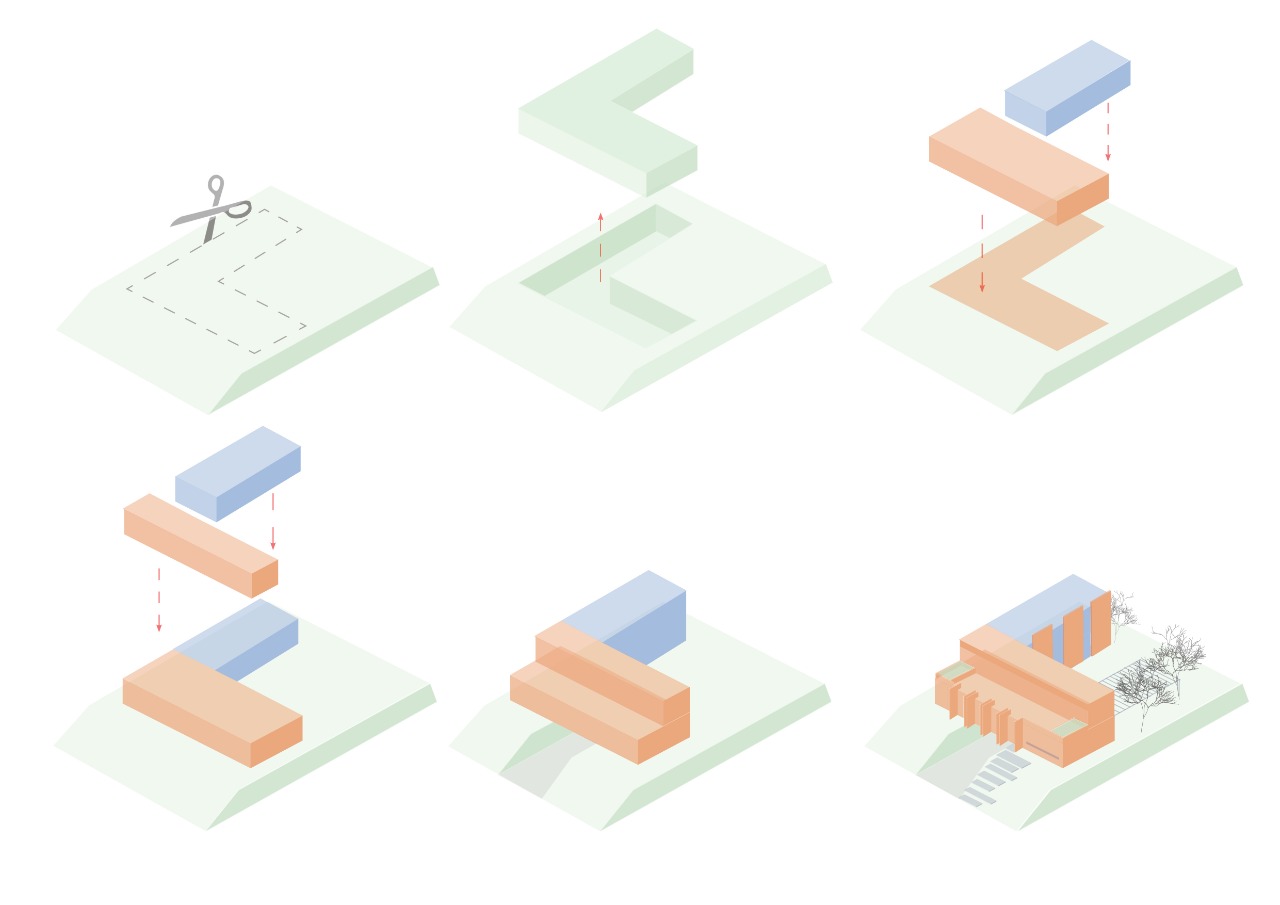
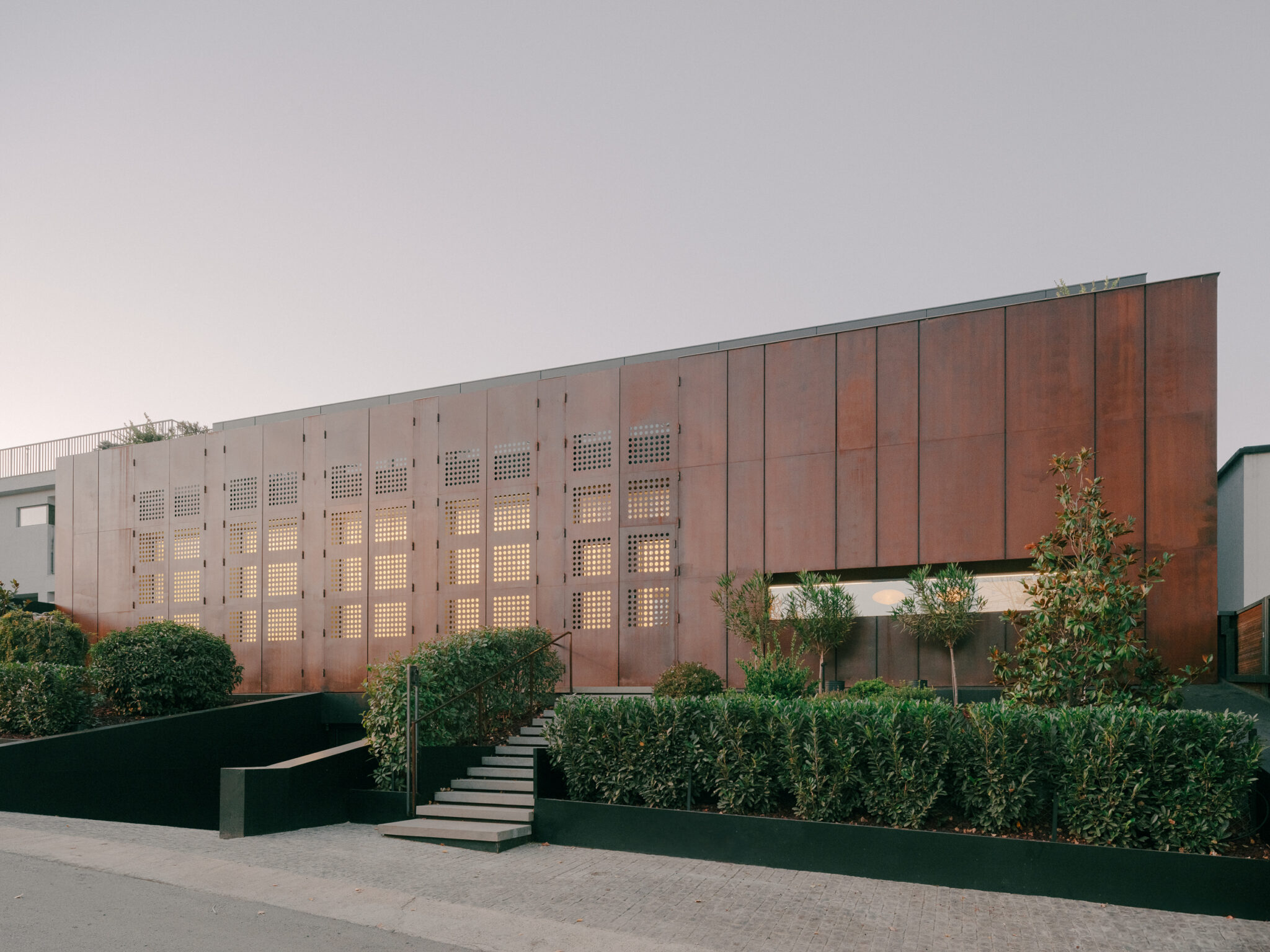
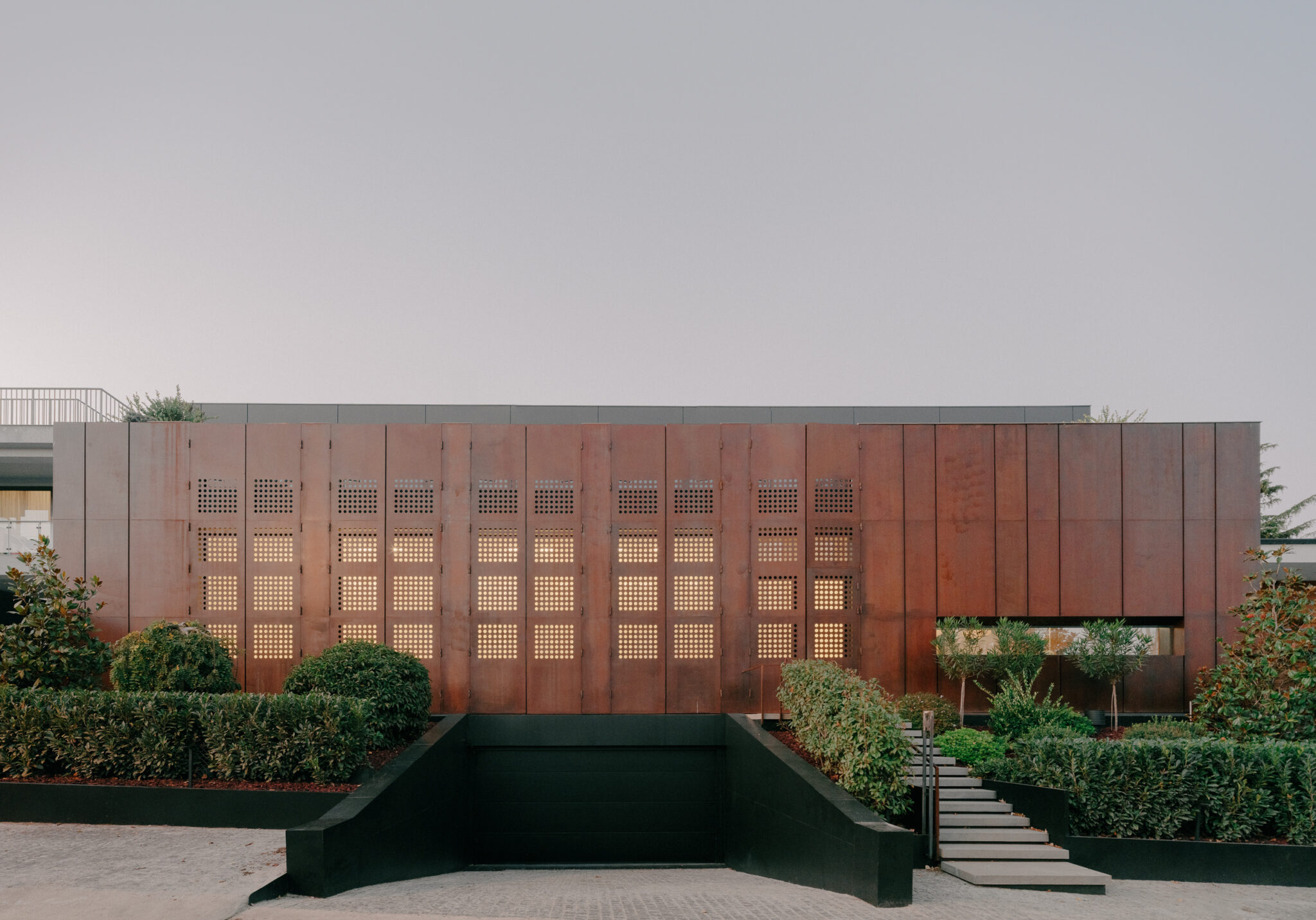
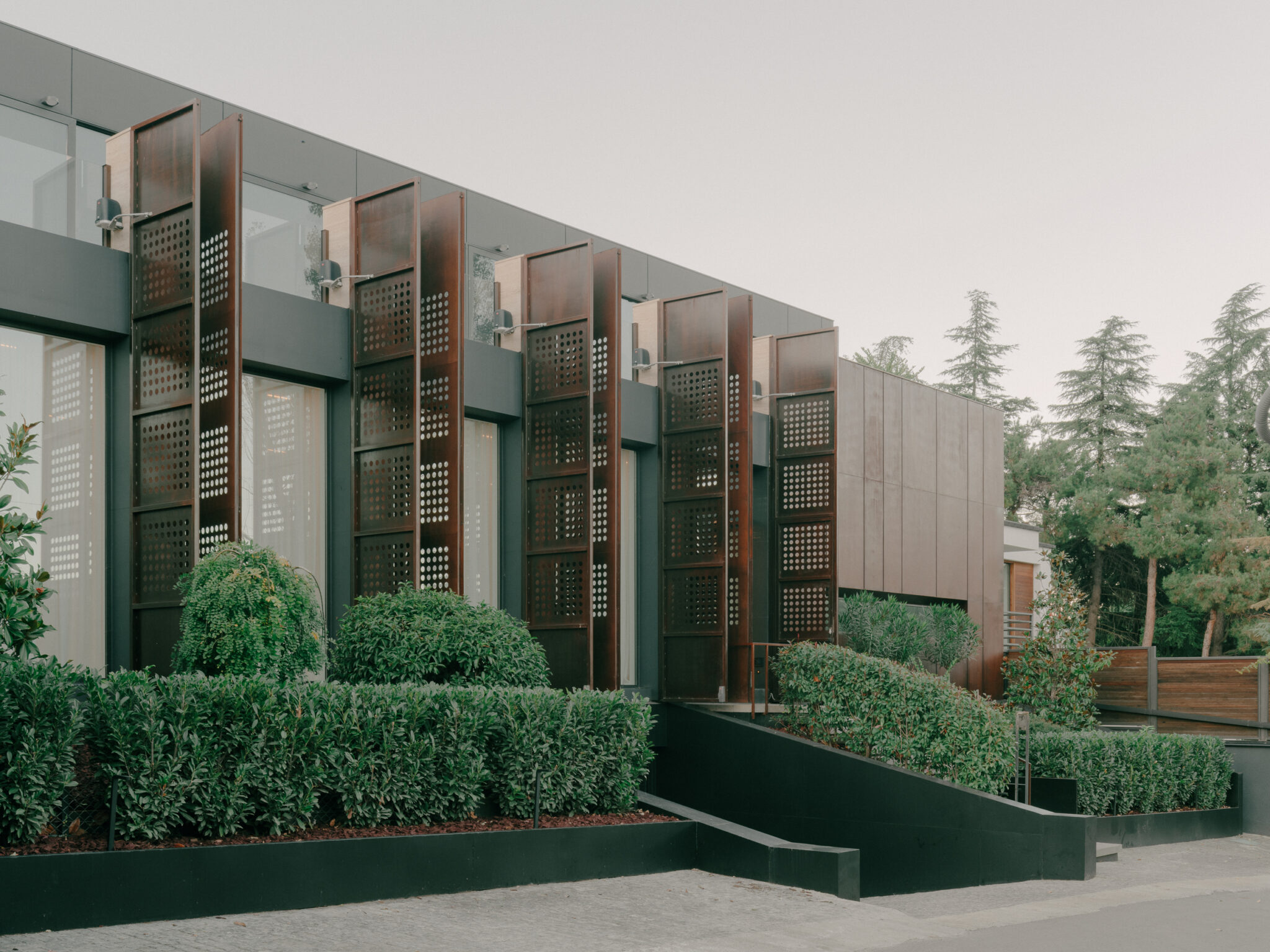
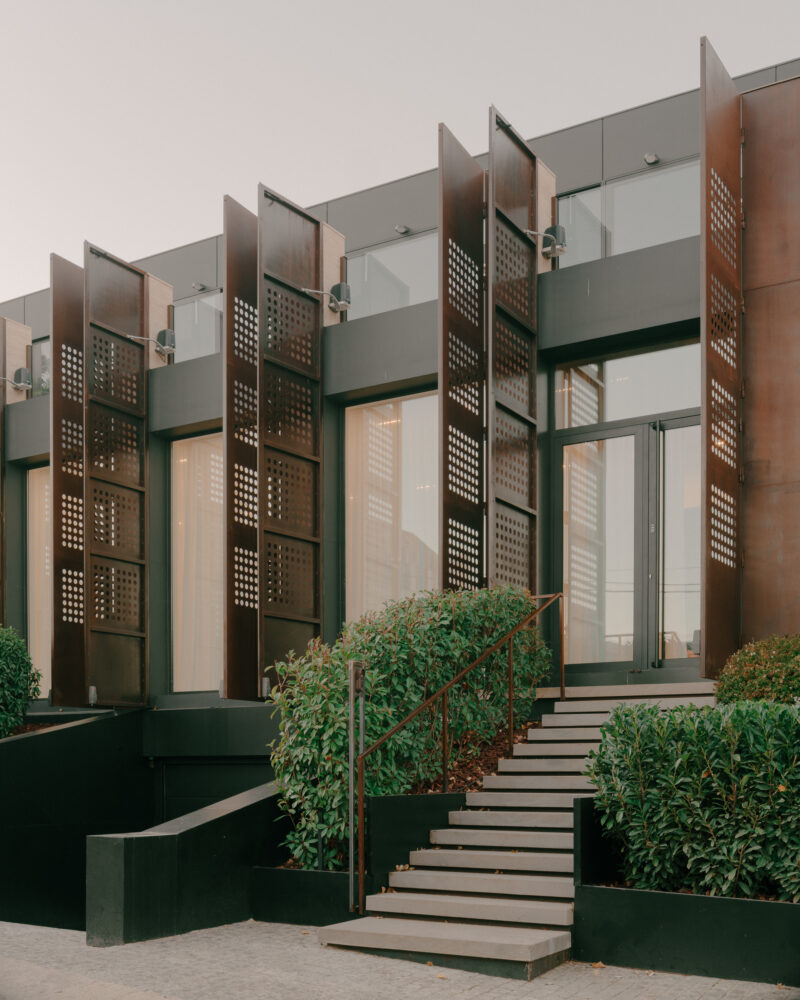
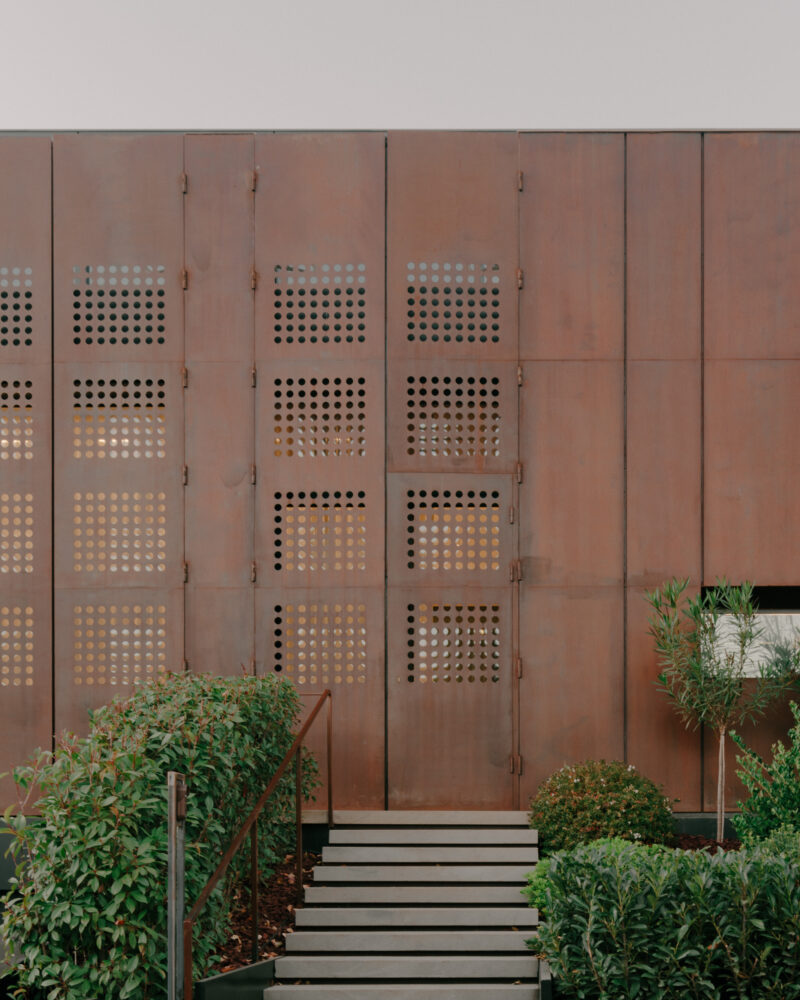
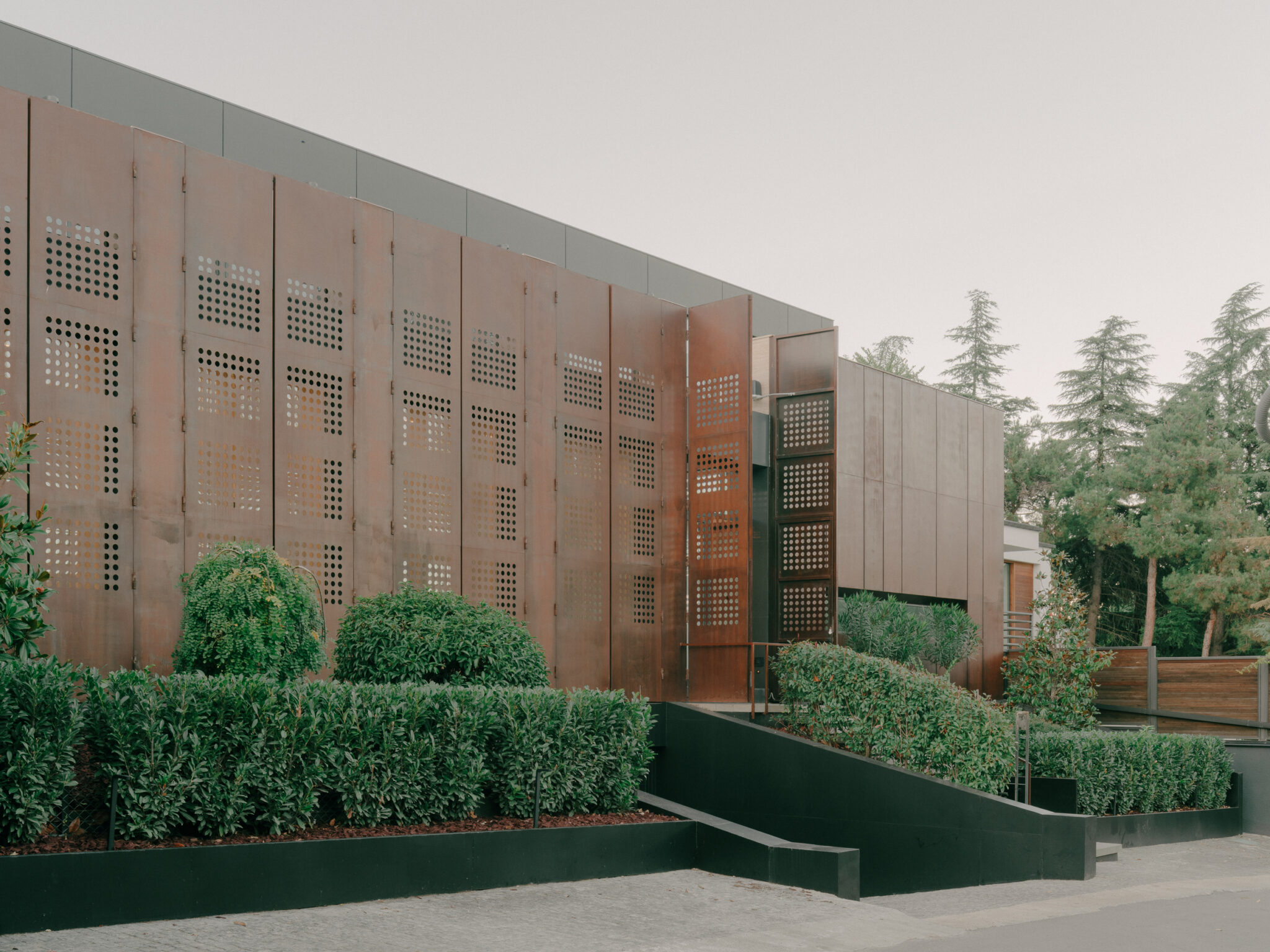
This residence is conceived as an inward-oriented domestic landscape shaped by the constraints of its dense suburban context. Rather than positioning the house as an object within a fenced plot, the architecture itself becomes the perimeter, enclosing the site and directing life toward a protected interior realm. In this way, the project reinterprets the enclosure-dominated fabric typical of its surroundings, transforming limitation into spatial opportunity.
Inner Courtyard
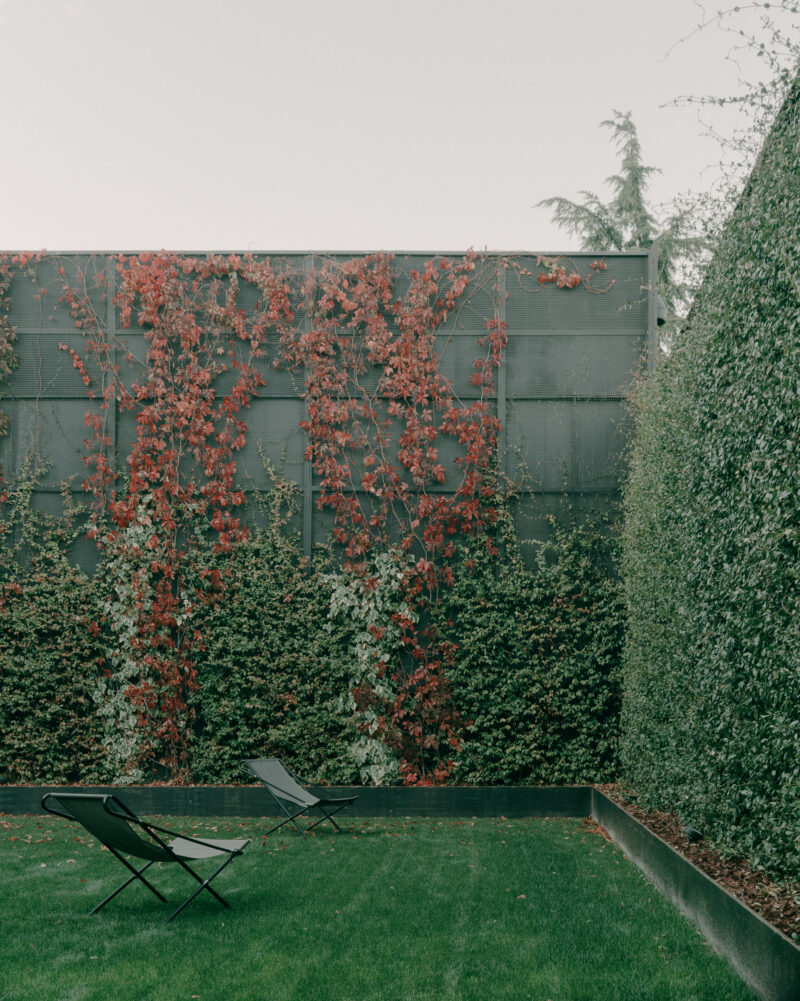
The courtyard forms the quiet heart of the house, a protected outdoor room enclosed by the permeable metal envelope. Shielded from the street yet open to the sky, it establishes a calm micro-landscape where vegetation, light, and seasonal change become integral to everyday life. Climbing greenery softens the architectural boundary, creating a tactile contrast between the living surface of the garden and the precise geometry of the surrounding walls.
Functioning as both spatial and atmospheric core, the courtyard organizes circulation and frames views from the interior, allowing natural light and fresh air to permeate the dwelling. Throughout the day, filtered sunlight and shifting shadows animate the surfaces, reinforcing the sense of enclosure while maintaining a visual connection to the outdoors. In this way, the courtyard operates as a transitional realm — neither fully inside nor outside — grounding the house in a serene, introspective landscape.
Interior
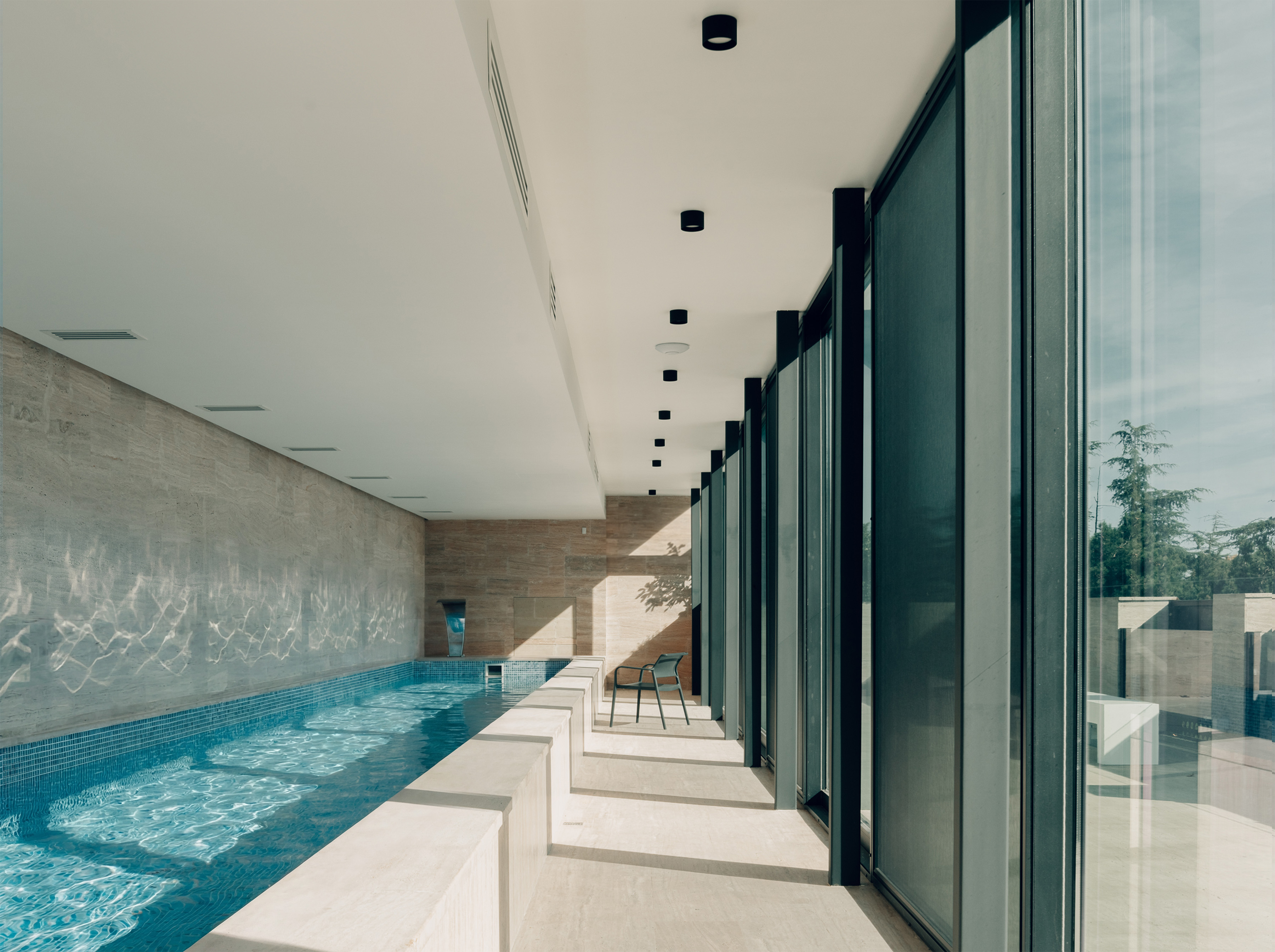
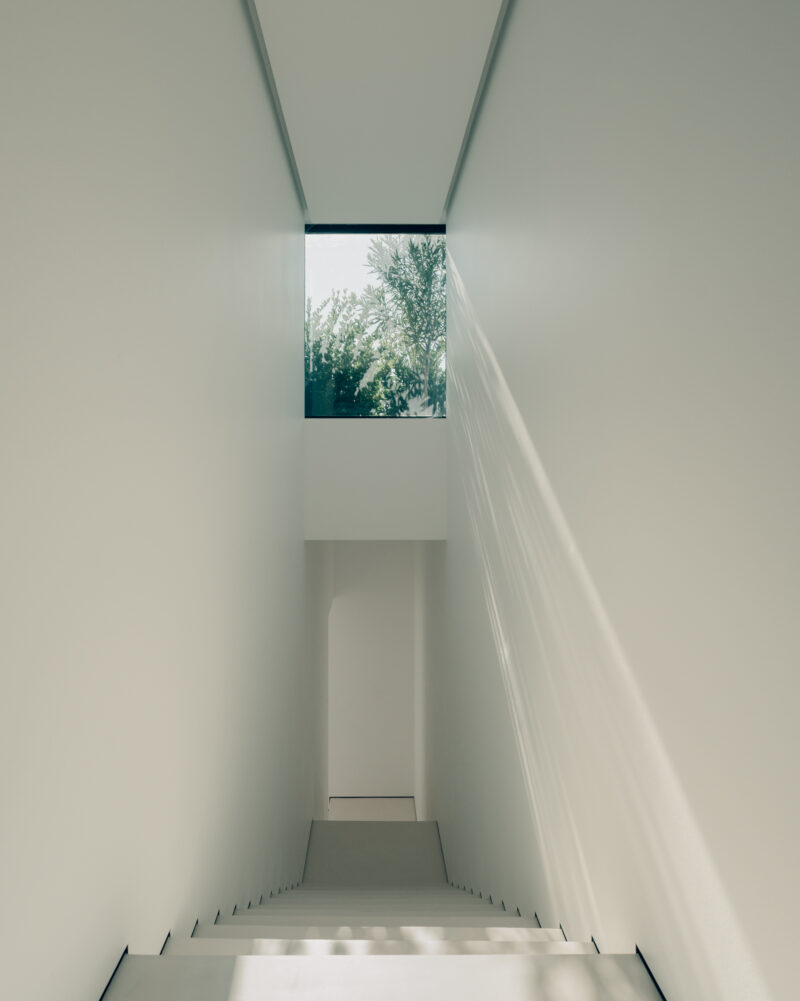
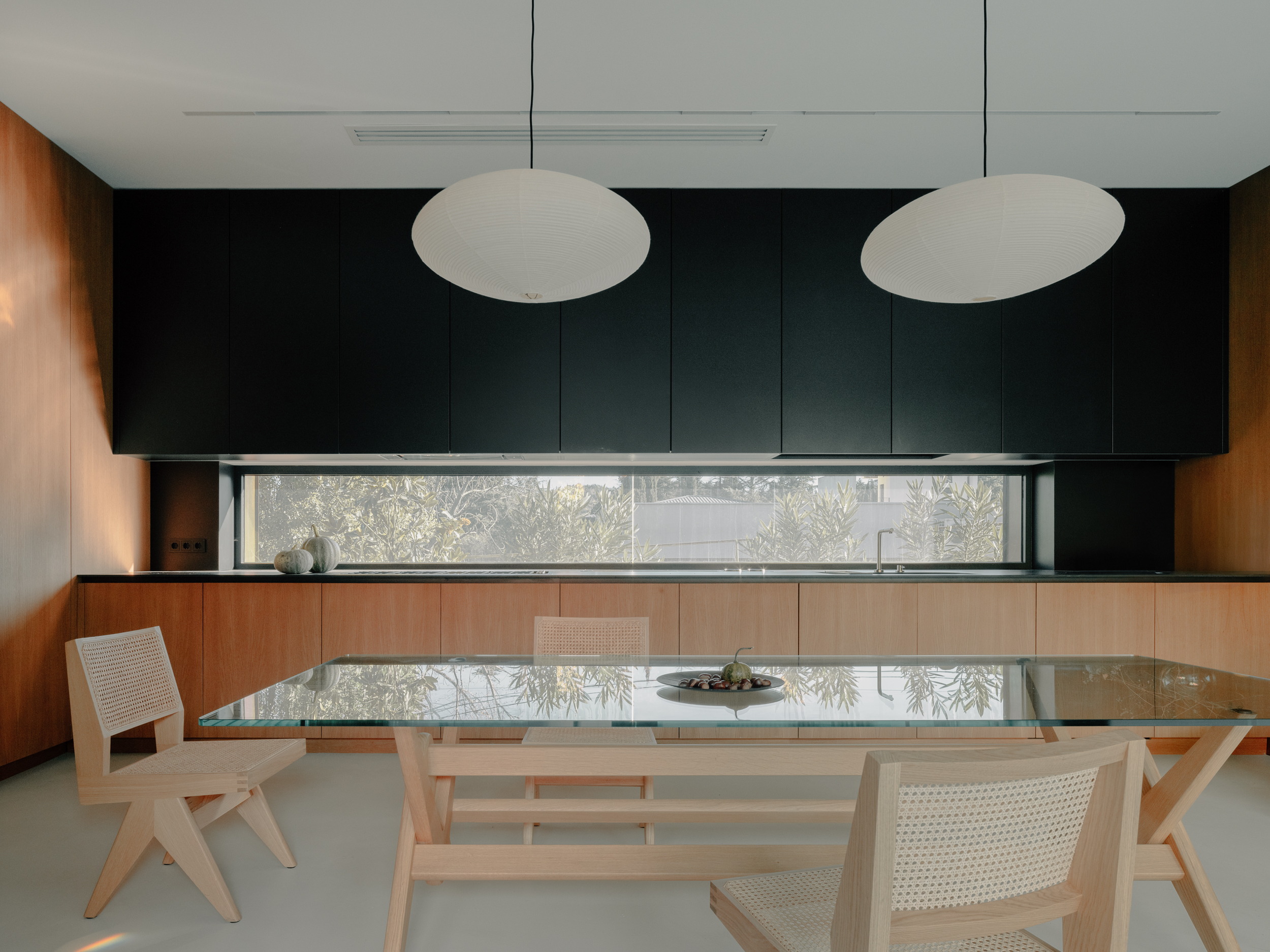
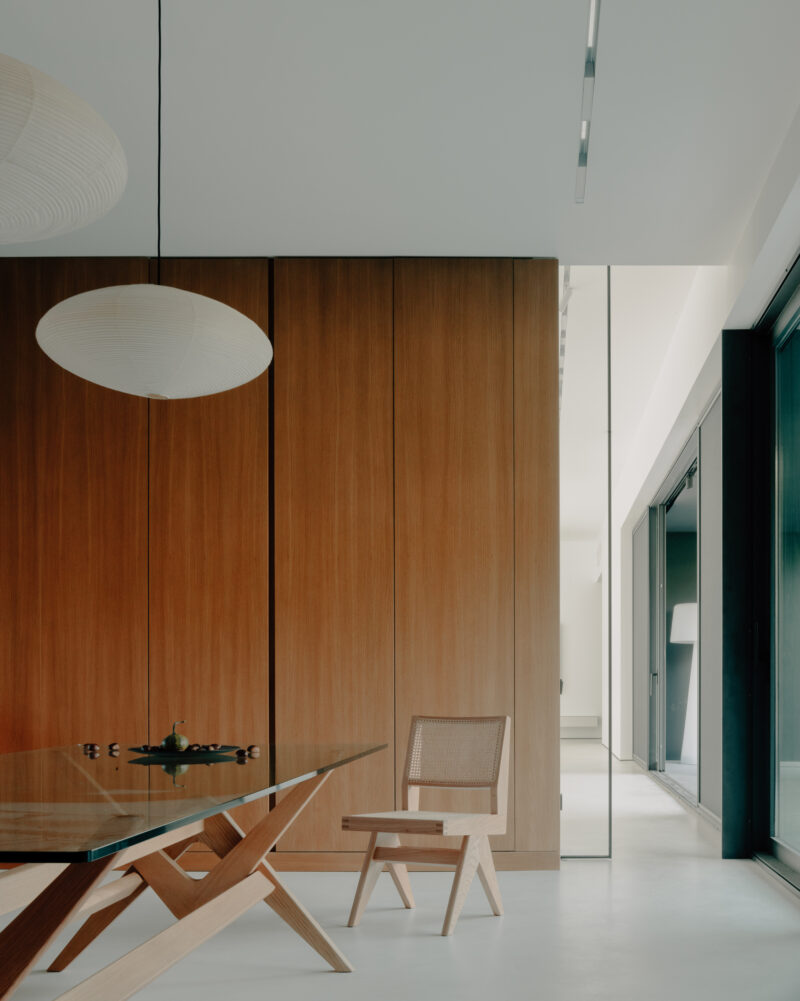
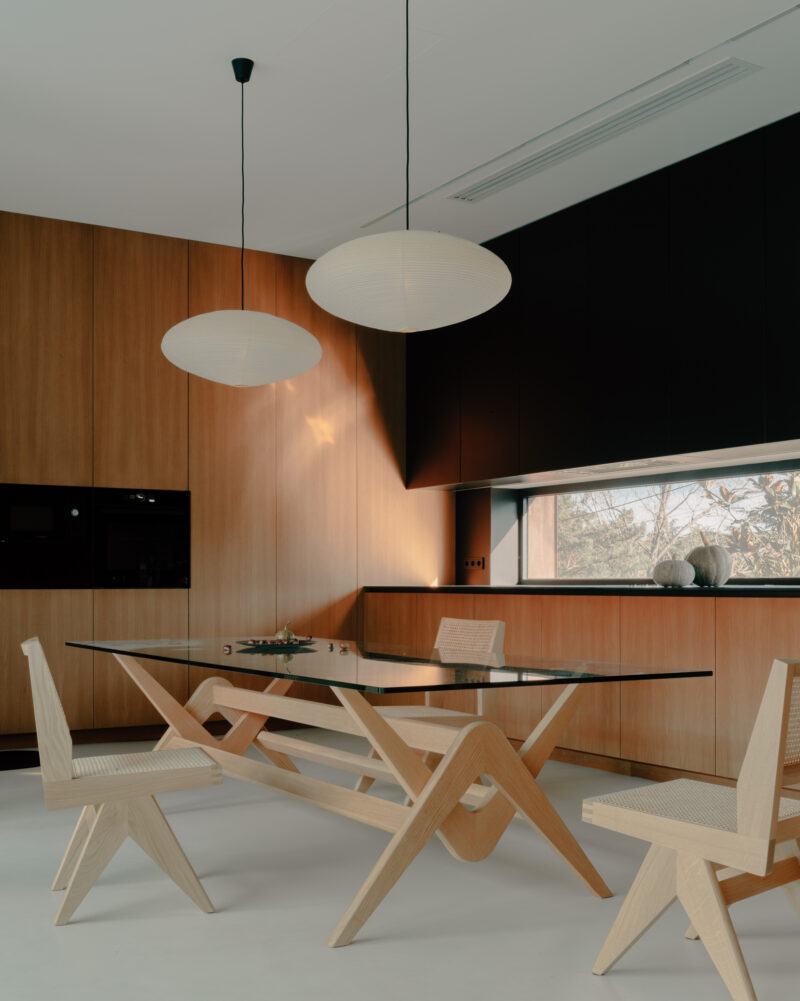
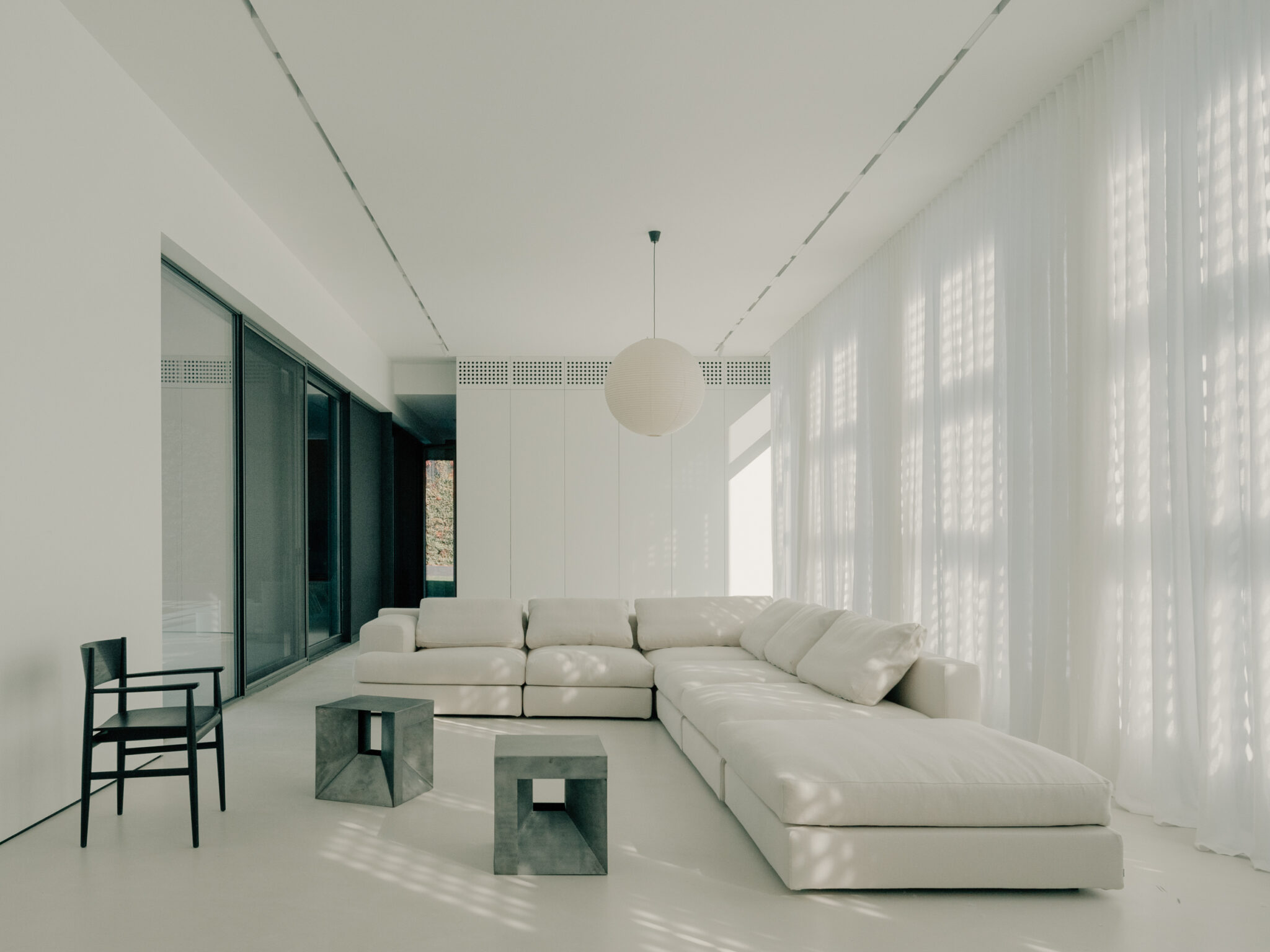
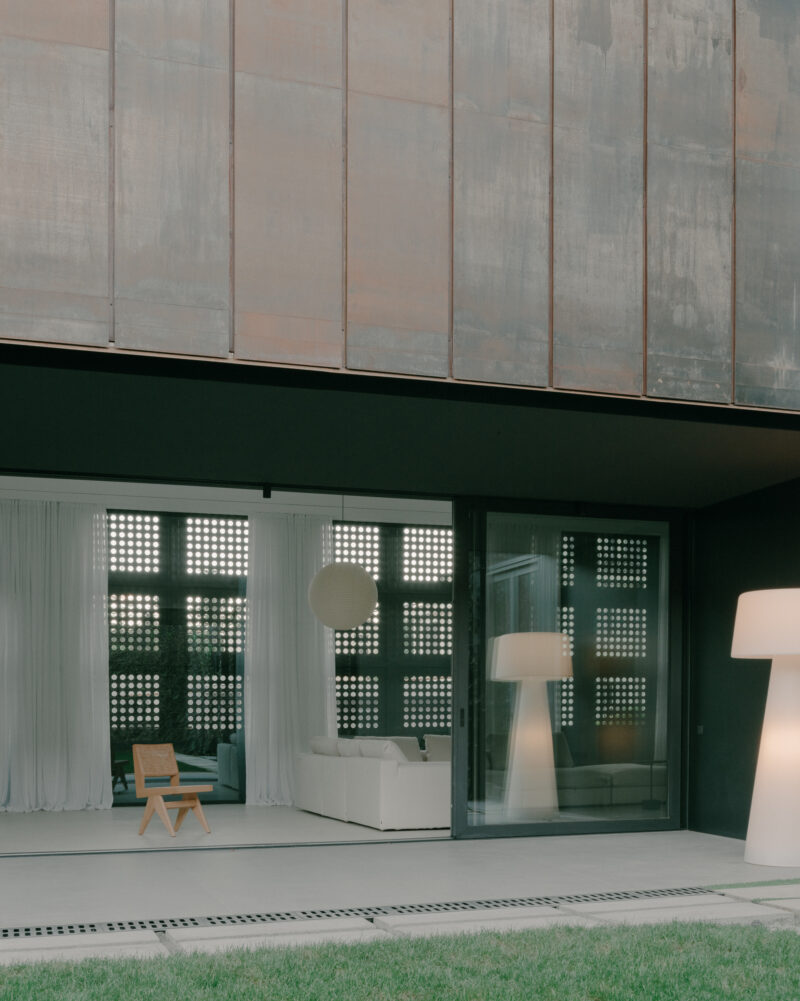
The interior is conceived as a calm, light-filled counterpoint to the protective exterior envelope, unfolding as a continuous sequence of spaces oriented toward the garden and the indoor pool. Daylight penetrates deep into the plan through large glazed openings, while the perforated metal façade is perceived from within as a delicate layer of filtered light. The resulting pattern of soft shadows animates walls and floors throughout the day, giving the otherwise restrained spaces a subtle sense of movement and temporality.
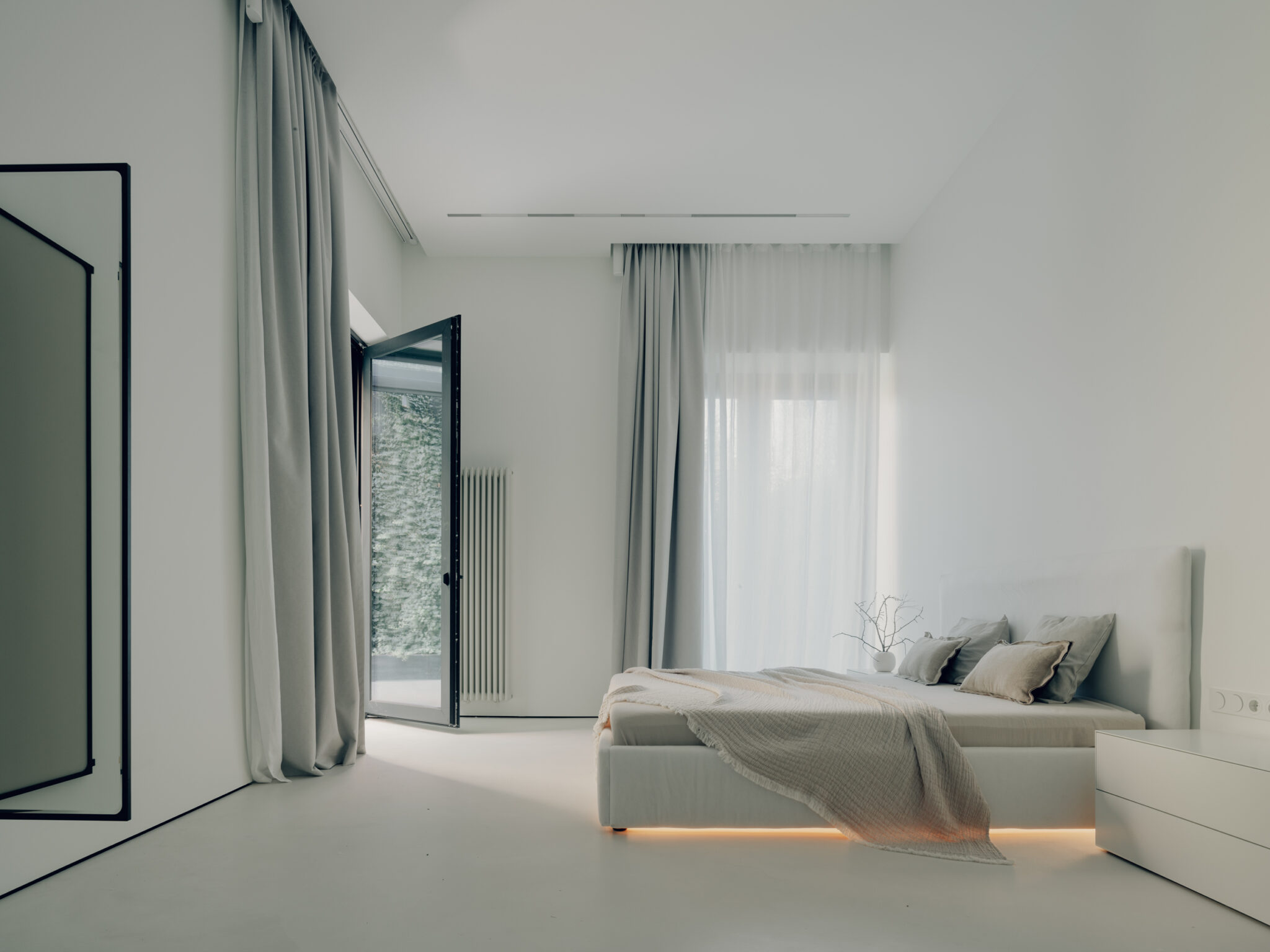
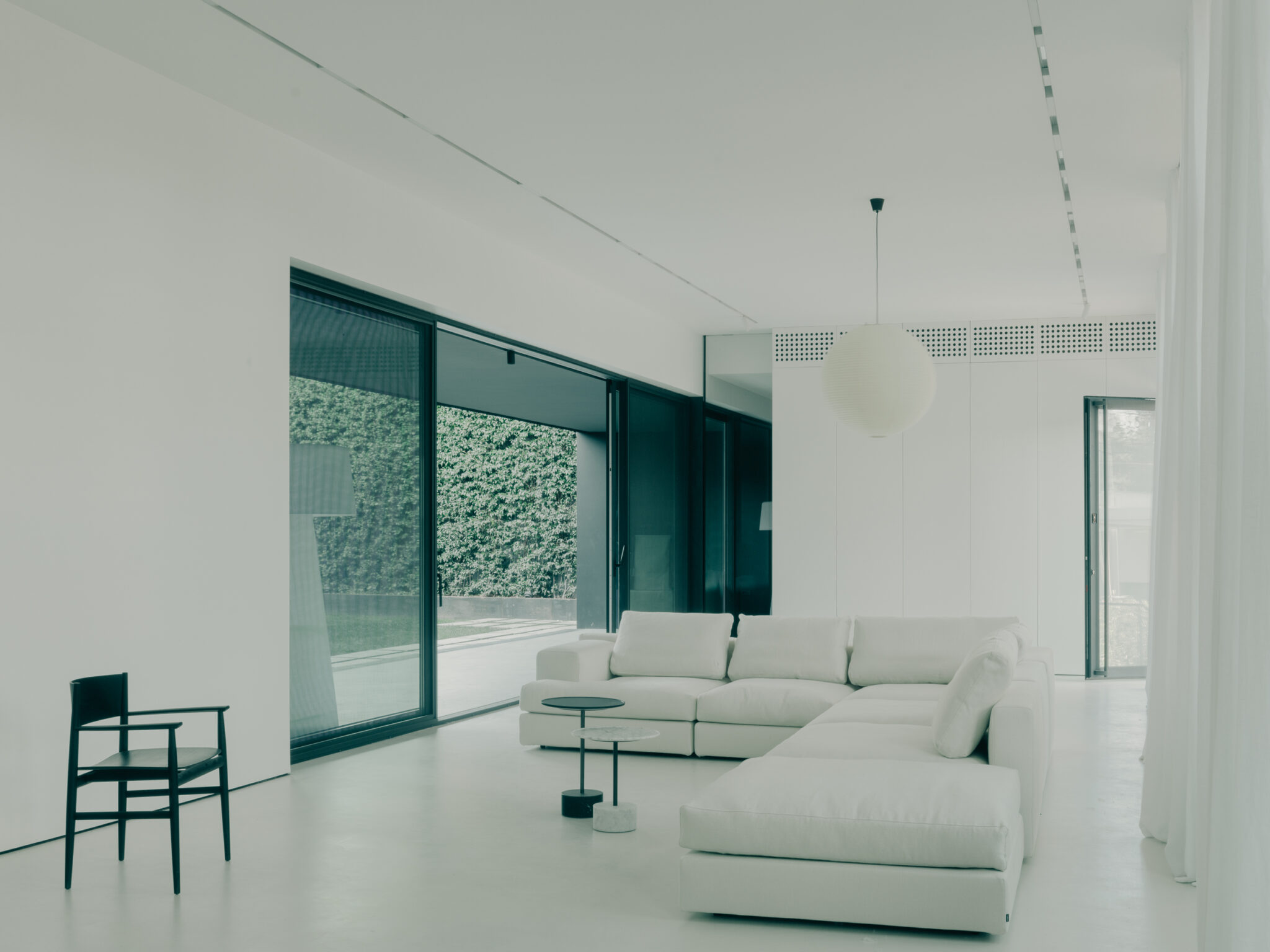
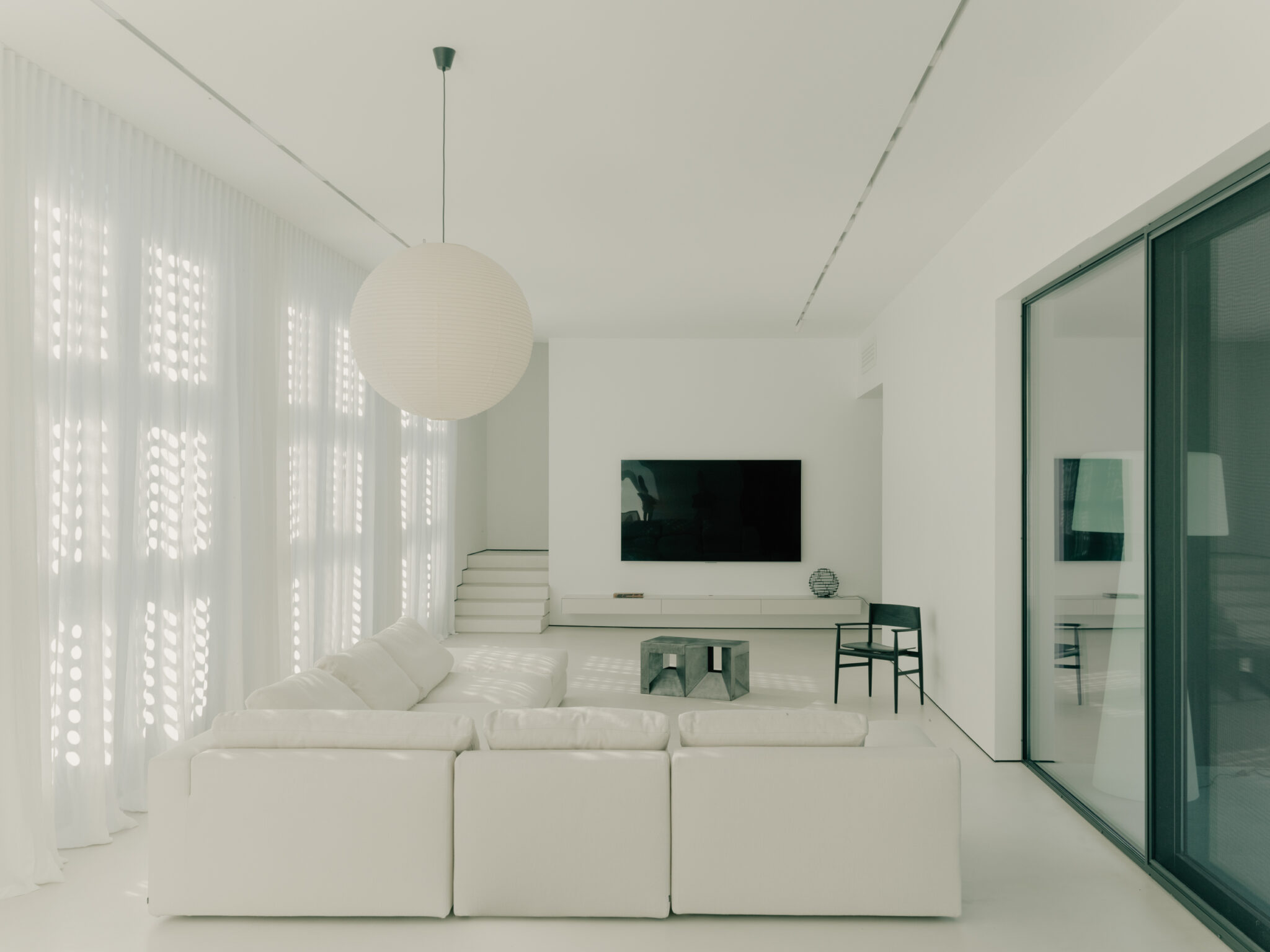
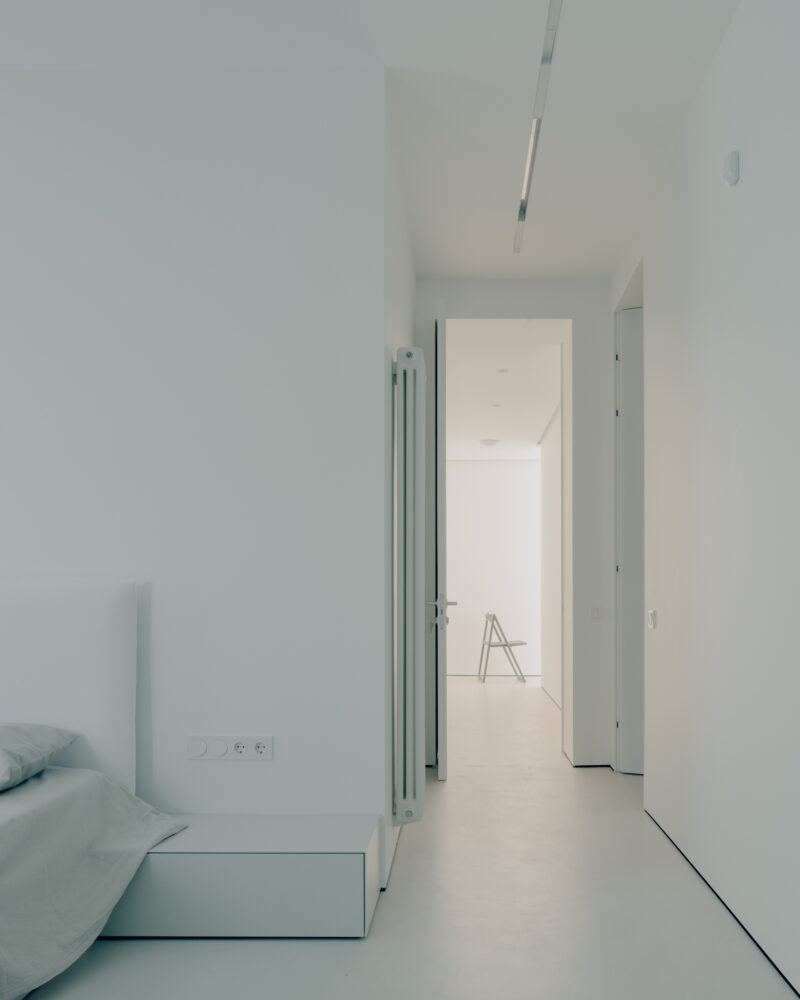
A minimal material palette reinforces clarity and spatial continuity. White surfaces, integrated furnishings, and precise detailing create a neutral backdrop where proportion and light define the atmosphere, while the indoor pool introduces a reflective, atmospheric dimension at the heart of the house. Circulation zones are treated as quiet transitions between more public living areas and private rooms, establishing a fluid progression that balances openness with a sense of calm enclosure.